WFAA - News from North Texas
- 4.2
- Rating
- 500.00K
- Installs
- Free
- Price

 Analysis by App-foxy
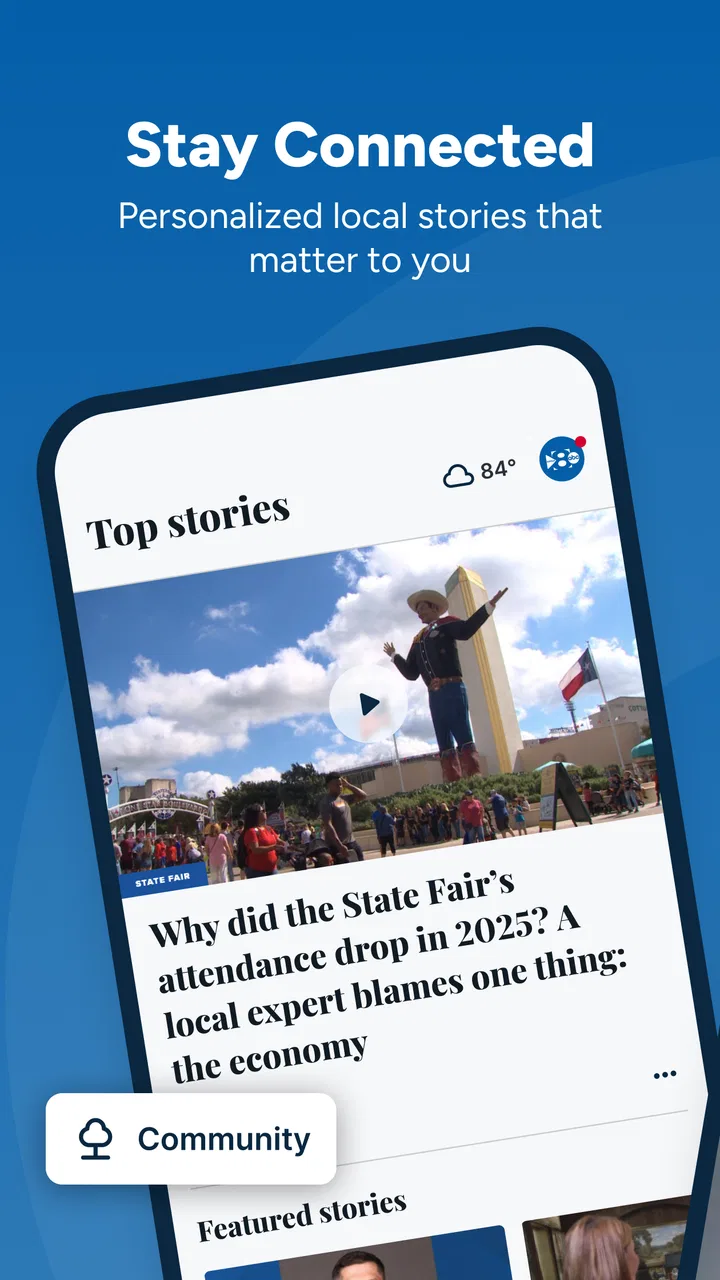
I approached WFAA as a practical local-news tool rather than something I would open for endless browsing. Its focus is North Texas coverage from WFAA and WFAA.com, bringing news, weather, sports, and traffic into one place. That narrow regional focus is its biggest reason to exist: if your day depends on what is happening around North Texas, a local newsroom can be more useful than a broad national news app.
The app is free, aimed at Everyone, and developed by TEGNA. It has built a sizeable audience, with more than five hundred thousand installs and an average rating of 4.2 from roughly ten thousand ratings. Those figures suggest a well-established app, although they do not guarantee that every phone or every network connection will behave perfectly. My overall impression is that it works best as a quick local check-in, especially when I want to know whether weather or traffic could change my plans.
Where the experience can get stuck
The first point of friction is expectation. This is not a general-purpose news reader with a wide range of international sources. Its value comes from its North Texas perspective. If I am looking for national politics, worldwide business coverage, or a large collection of publications in one feed, I would choose a broader news app instead. WFAA is more useful when location and immediacy matter more than breadth.
You May Also Like

 Blood Strike: 2.5 Anniversary
Blood Strike’s Loadouts Turn Every Drop Into a Tactical Gamble
A close look at Blood Strike’s custom loadouts: how fast access to signature weapons reshapes its battle royale rhythm, rewards preparation, and narrows the gap between fights.

 Pandora - Music & Podcasts
Pandora’s Music Is Easy to Start, but Harder to Recover
Pandora’s strength is its low-effort path from a seed to a station. Its weak spot is how much confidence it asks you to place in connection, setup, and quiet recovery.

 8 Ball Pool
 Is Built on Rivalries, Rematches, and Routine
A close look at the rivalries, rematches, shared routines, and unanswered safety questions that turn a quick pool match into a persistent mobile community.

 Samsung Music
’s Quiet Strength Is Playing What You Already Own
Its reach comes less from spectacle than from dependable access to a personal library. That simplicity is both the app’s strongest retention engine and its ceiling.

 AccuWeather: Weather Radar
AccuWeather Review: A Quick, Clear Forecast for Everyday Decisions
For everyday plans, the best forecast is the one you can understand quickly. AccuWeather makes rain timing, radar, and local conditions easy to act on, with a few trade-offs.

 Hill Climb Racing
Why Hill Climb Racing Still Turns Crashes Into One More Run
A tiny car, a bumpy hill and one more upgrade: Hill Climb Racing keeps resurfacing because its simple chaos makes every near-miss feel personal.
More From Our News Desk



Another common stumbling block is assuming that every part of the app will feel equally important at all times. Local news, weather, sports, and traffic serve different purposes. A person checking the morning commute may only need traffic information, while someone following a storm will care more about weather coverage and developing local reports. I get better results when I treat the app as a set of quick visits for specific needs instead of trying to read every available item.
News apps can also feel slow or incomplete when the phone has a weak connection. That does not necessarily mean the application itself is broken. A crowded mobile network, unstable Wi-Fi, or a temporary delay while content refreshes can all make a local news feed appear less responsive. Before reinstalling anything, I would switch between Wi-Fi and mobile data, reopen the app, and check whether other online services are behaving normally.
There is also a difference between a local news application and a live conversation platform. WFAA can help me find reporting and updates from the station, but it is not the same as checking a social network for unverified eyewitness posts. That trade-off is important during fast-moving events. I prefer the newsroom context when accuracy matters, while social platforms may show raw reactions sooner but require much more caution.
Why the regional focus matters
For a North Texas resident, the local angle can reduce the effort needed to find relevant information. Instead of sorting through a national feed to locate a nearby road problem or weather development, I can start with a source built around the area. This is particularly useful before leaving home, during a change in weather, or when a local sports result is the only update I want.
The same focus can be a limitation for people who move frequently or live outside the region. Travelers may find it useful while visiting North Texas, but it will not replace a local news source for their home area. I would also skip it if my main goal is a customized collection of many publishers rather than coverage centered on WFAA.
Setup checks that save time
WFAA supports older devices, with a minimum operating-system requirement of 7.1, and the current version is 50.10.6. That broad compatibility is helpful if I am using an older phone, but compatibility alone does not ensure a smooth experience. I still check that the operating system is reasonably stable, that the app has enough room to update, and that the device is not struggling with storage or background processes.
My preferred setup is simple. I install the app from the official app store, open it on a reliable connection, and give the first load enough time to complete before judging it. If the initial screen looks empty, I do not immediately assume that the news feed has failed. I first refresh once, confirm that the connection is active, and try again later if the network is busy.
It is worth deciding how the app fits into a daily routine before changing any phone settings. For example, I might open it once in the morning for weather and traffic, then return during the afternoon for local developments. That approach is less distracting than constantly checking a news feed, and it makes it easier to notice whether a problem is consistent or only happens during one particular period.
Because the app covers several subjects, I also avoid judging it from a single section. A quiet sports period does not mean the local-news experience is poor, just as a busy news day does not tell me whether the traffic information will meet my needs. I test the areas I actually plan to use: local reporting, weather, sports, and traffic. That gives me a more honest idea of whether it belongs on my phone.
Questions to answer before relying on it
One practical question is whether it is suitable for urgent decisions. I would use it as one useful source for staying informed, but I would not treat any app as a substitute for official emergency instructions or direct information from local authorities. During severe weather or another serious event, I would cross-check important guidance rather than relying on a single news feed.
Another question is whether it replaces a weather or navigation app. In my experience, it is better viewed as a local-news companion than a complete replacement for specialized tools. A dedicated navigation app may be better for turn-by-turn routing, while a dedicated weather service may offer more detailed forecasting tools. WFAA makes more sense when I want those subjects presented through a North Texas newsroom.
The age rating of Everyone makes it an accessible choice for a household device, but that does not mean every story will be equally comfortable for every reader. News can naturally include serious subjects. I would still use ordinary judgment when handing the phone to a child, especially during major breaking events.
Recovering a routine when something goes wrong
When a story or section refuses to load, I use a short recovery sequence instead of repeatedly tapping the same screen. I close and reopen the app, verify the connection, and try a different section. If weather loads but news does not, or traffic works while another area does not, that pattern tells me the issue may be limited to a particular content request rather than the entire installation.
If nothing loads, I test another app that needs the internet. A failure across several apps points toward the network or device. If other apps work normally, I check whether WFAA has an available update and restart the phone before considering more disruptive steps. This order matters because it preserves time and avoids losing any personal setup unnecessarily.
Reinstalling is a last resort for me, not the first fix. It can clear a damaged local installation, but it also takes longer and does not solve a weak signal or a temporary service problem. I would only use it after confirming that the operating system is supported, the connection is stable, and restarting has not helped. If the same issue returns immediately, the problem may be outside anything I can repair from the phone.
A useful recovery habit is to keep a second way of checking important information. If I am preparing for a commute during uncertain weather, I can use WFAA for local reporting while checking a navigation service separately. That is not a criticism of the app; it is a sensible division of jobs. Local journalism provides context, while specialized services may handle a narrower task more deeply.
A realistic morning workflow
Imagine I have an appointment across North Texas on a rainy weekday. I open WFAA before leaving, look for local weather developments, and check traffic coverage for anything that could affect the route. If the app opens normally, I get a quick regional picture before switching to navigation for the actual drive. If the feed appears stuck, I test the connection and use another trusted source rather than delaying my departure while troubleshooting.
That workflow shows where the app is strongest. It gives me a local starting point without asking me to assemble several regional sources. It also shows why I would not use it alone for every decision. Traffic conditions can change after I check them, and a news report is not the same thing as live route guidance. The best result comes from combining WFAA’s local context with the tool designed for the immediate task.
For sports fans, the routine is different. I can open the app when I want North Texas sports coverage alongside the rest of the local news rather than maintaining a separate national sports feed. The trade-off is that someone seeking deep statistics, extensive league coverage, or highly specialized analysis may prefer a dedicated sports application. WFAA is convenient for regional awareness, not necessarily a complete sports archive.
When the app is not the cause
It is easy to blame the app when a headline seems old, a page takes time to appear, or a feed changes after I return to it. News is a moving product, and local coverage can develop between visits. A refresh may change what appears at the top without indicating that anything is wrong. I try to distinguish a normal editorial update from a technical failure by checking whether the app still responds and whether other sections open.
Device performance can be another hidden factor. An older phone may technically meet the operating-system requirement but still feel slow if many apps are active, storage is nearly full, or the battery-saving mode is limiting background activity. Closing unused apps, freeing space, and restarting the device are sensible general checks. I would not assume that an older supported phone will feel identical to a newer one.
Network conditions deserve special attention when traveling. A local app may work well at home but appear unreliable in a building with poor reception, on congested public Wi-Fi, or while moving between connection types. I test it in a stable location before concluding that the service is consistently unavailable. If the issue follows the app across several reliable connections, then I treat it as a genuine application problem rather than a location problem.
There is also a human factor: notifications and frequent checking can make a news app feel more intrusive than useful. I prefer to keep my routine intentional. If I only need a morning overview, I open it at that time and leave the rest of the day to other tasks. Readers who want constant alerts or a highly personalized stream may prefer a platform designed around those controls, while readers who want a straightforward regional source may appreciate the simpler habit.
How it compares with usual alternatives
Compared with a national news aggregator, WFAA gives me a clearer North Texas identity but a narrower range of viewpoints and subjects. Compared with social media, it offers a more organized newsroom destination, although social feeds may expose me to local reactions more quickly. Compared with dedicated weather, traffic, or sports apps, it brings convenience and regional context but may not provide the same depth in one specialized area.
That comparison helps define the right audience. I would recommend it to a North Texas resident who wants one familiar place for local news, weather, sports, and traffic. I would also suggest it to someone visiting the area who wants regional awareness. I would skip it for a reader whose priority is international coverage, advanced route planning, detailed forecasting tools, or a fully customizable multi-source news dashboard.
The free price removes the main barrier to trying it, which matters because the best way to judge a local-news app is to use it during the parts of the day when local information actually affects you. I would test it over several ordinary mornings and one changing-weather day rather than forming an opinion after a single launch. That reveals whether the coverage matches my interests and whether the app fits naturally into my routine.
My practical verdict
WFAA is a focused News & Magazines app that earns its place through regional relevance. TEGNA has kept the product available for a wide range of devices, and its long presence since December 17, 2010, helps explain why it feels like an established local companion rather than a temporary experiment. I like it most when I need a quick North Texas overview and do not want to search across several separate sources.
Its limitations are just as clear. It is not a complete replacement for national news, specialized weather tools, navigation, or deep sports services. Connection problems, older-device performance, and the natural variability of breaking coverage can also affect the experience. The right response is to check the network and device before blaming the app, then use a specialized alternative when the task demands more detail.
After using it as part of a practical routine, I would recommend giving WFAA a try if your daily decisions are tied to North Texas. Start with the sections you genuinely need, use it as a local context source, and keep another tool available for navigation or urgent official instructions. My recommendation is strongest for regional awareness, not for replacing every other information app.
For a free app with an Everyone rating and a current version of 50.10.6, it offers a sensible way to keep local coverage close at hand. I would install it for morning checks, weather changes, traffic awareness, and regional sports updates. If your information needs extend far beyond North Texas, I would pair it with a broader service or choose that broader service instead.
FAQs for WFAA - News from North Texas
01What features does the WFAA app offer for news updates?
The WFAA app provides comprehensive news coverage with real-time updates on local, regional, and national stories. It includes video clips, articles, and live broadcasts. Users can personalize their news feed, receive push notifications for breaking news, and access weather forecasts. The app also offers sections for sports, traffic, and community events.
02Is the WFAA app free to download and use?
Yes, the WFAA app is free to download on both Android and iOS platforms. While the app itself does not require a subscription, it may contain ads. Users can access a wide range of news content without any charges, making it a convenient choice for staying informed on the go.
03How reliable is the information provided by the WFAA app?
The WFAA app is backed by a reputable news organization, ensuring that the information is accurate and reliable. The app delivers news curated by experienced journalists and editors, adhering to journalistic standards. However, users should always cross-reference important information to ensure accuracy.
04Can I customize notifications on the WFAA app?
Yes, the WFAA app allows users to customize notifications according to their preferences. You can choose to receive alerts for breaking news, weather updates, and specific topics of interest. This feature helps users stay informed about the news that matters most to them without being overwhelmed by unwanted notifications.
05Does the WFAA app have any accessibility features?
The WFAA app includes several accessibility features to enhance usability for all users. It supports text resizing for better readability and offers voiceover compatibility for visually impaired users. Additionally, the app's simple and intuitive design ensures that it is easy to navigate for individuals with varying levels of technical expertise.
Pros
- User-friendly interface with clear navigation.
- Real-time notifications for breaking news.
- Customizable news feed for local updates.
- High-quality video content and live streams.
- Weather updates with interactive radar maps.
Cons
- Limited international news coverage.
- Occasional ad interruptions during videos.
- Some sections load slowly on older devices.
- No offline reading mode available.
- Requires sign-in for personalized features.

WFAA - News from North Texas
Gallery